Understanding Your Equate Blood Pressure Monitor
Home monitoring‚ as advised by the American Heart Association‚ empowers individuals—especially those with hypertension—to proactively manage their cardiovascular health effectively.
Regularly checking your blood pressure at home provides a more complete picture of your cardiovascular health than occasional readings at the doctor’s office alone. The American Heart Association strongly recommends home monitoring‚ particularly for individuals diagnosed with hypertension or those at risk of developing it.
Home monitoring allows you to track fluctuations throughout the day‚ identify potential “white coat hypertension” (elevated readings due to anxiety in a clinical setting)‚ and assess the effectiveness of lifestyle changes or medications. Consistent monitoring empowers you to actively participate in your healthcare and provides valuable data for your physician.
Why Use an Equate Blood Pressure Monitor?
Equate blood pressure monitors offer a convenient and affordable way to consistently track your health from the comfort of your home. They are particularly beneficial for individuals with diagnosed hypertension‚ as recommended by healthcare professionals like Dr. Heather Viola.
Regular home monitoring‚ facilitated by Equate devices‚ allows for early detection of changes‚ enabling timely adjustments to lifestyle or medication. This proactive approach‚ supported by the American Heart Association‚ can significantly improve cardiovascular outcomes and overall well-being. Equate provides accessible tools for effective health management.
Components of the Equate Blood Pressure Monitor
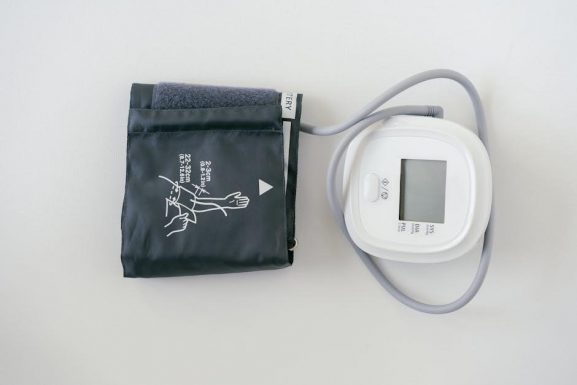
Equate monitors typically include a cuff and tubing‚ the main monitor unit displaying readings‚ and a power source—batteries or an AC adapter for operation.
Cuff and Tubing
The cuff‚ a fabric wrap‚ inflates to temporarily stop blood flow in your arm‚ allowing the monitor to accurately measure pressure. Proper cuff size is crucial; an ill-fitting cuff yields inaccurate results. Equate monitors often include a standard adult cuff‚ but different sizes are available.
The tubing connects the cuff to the monitor unit‚ transmitting air for inflation and deflation. Ensure the tubing is securely connected at both ends to prevent air leaks during measurement. Inspect the tubing regularly for cracks or damage‚ as this can affect performance.
Cuff material should be cleaned regularly to maintain hygiene and accuracy.
Monitor Unit
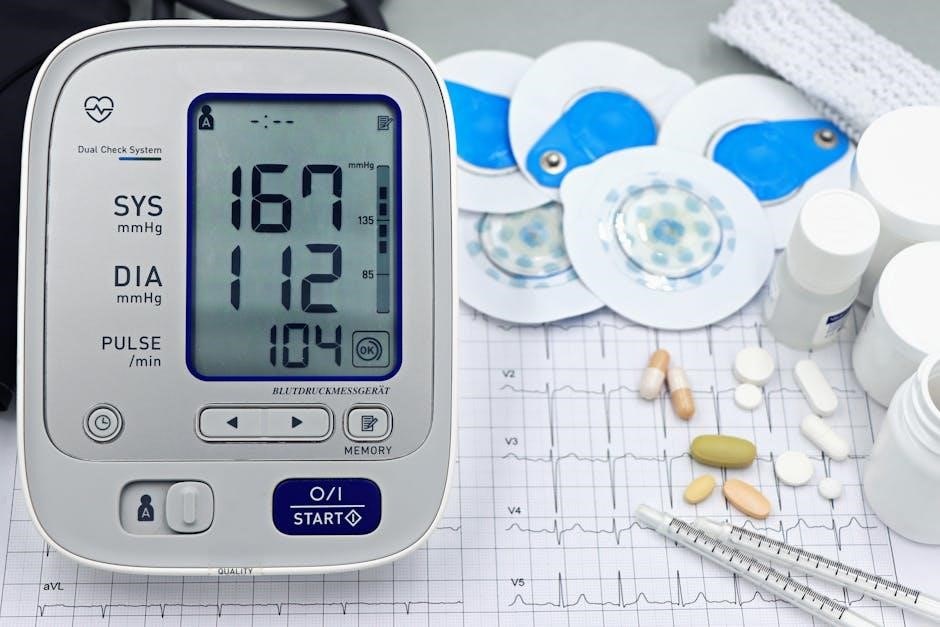
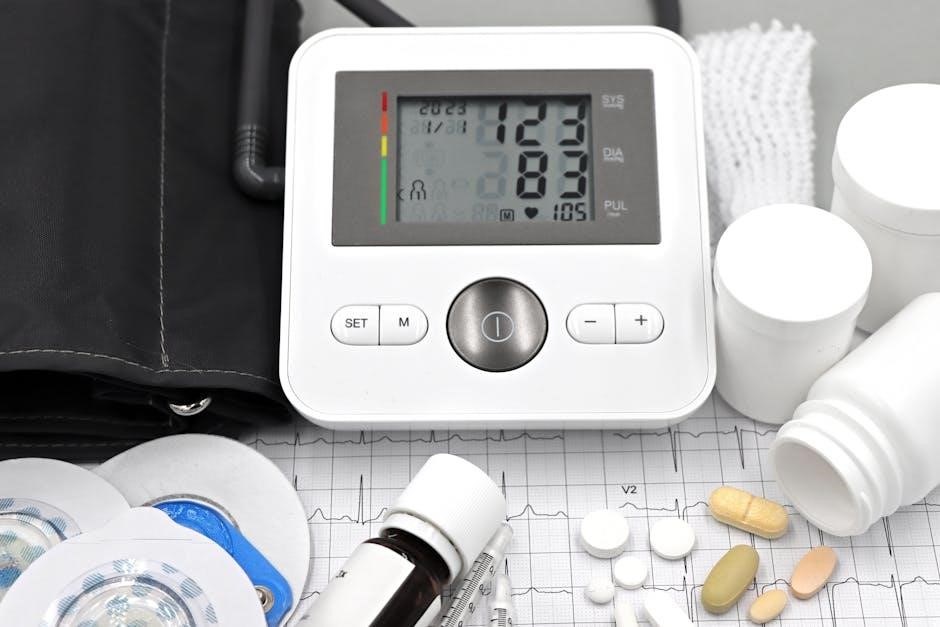
The monitor unit is the central hub‚ displaying your blood pressure readings and housing the operational buttons. It typically features a digital screen showing systolic and diastolic values‚ plus pulse rate. User-friendly buttons control power‚ start/stop measurement‚ and access memory functions.
Equate monitors often include features like irregular heartbeat detection and averaging of readings. The unit’s internal circuitry processes signals from the cuff to calculate blood pressure. Regularly check the display for clarity and ensure all buttons are functioning correctly.
Proper care involves protecting the unit from moisture and extreme temperatures.
Power Source (Batteries or Adapter)
Equate blood pressure monitors are commonly powered by batteries – typically AA or AAA – offering portability. Alternatively‚ some models support an AC adapter for continuous power. Always use the specified battery type to avoid damaging the unit.
When using batteries‚ replace them when the low battery indicator appears on the display to ensure accurate readings. If utilizing an adapter‚ ensure it’s securely connected and meets the voltage requirements.
Remove batteries if the monitor will be stored for an extended period to prevent leakage and corrosion.

Setting Up Your Equate Monitor
Proper setup involves installing batteries or connecting the adapter‚ attaching the cuff securely‚ and accurately setting the date and time for reliable tracking.
Installing Batteries or Connecting the Adapter
Battery installation typically requires opening a compartment on the monitor unit and inserting the correct type and number of batteries‚ observing the indicated polarity (+ and -).
Alternatively‚ some Equate monitors can be powered using an AC adapter. Connect the adapter to the designated port on the monitor and plug it into a standard electrical outlet.
Ensure the adapter is securely connected to both the monitor and the power source. Verify proper operation by powering on the device; a display should illuminate‚ confirming the power connection is successful.
Attaching the Cuff Correctly
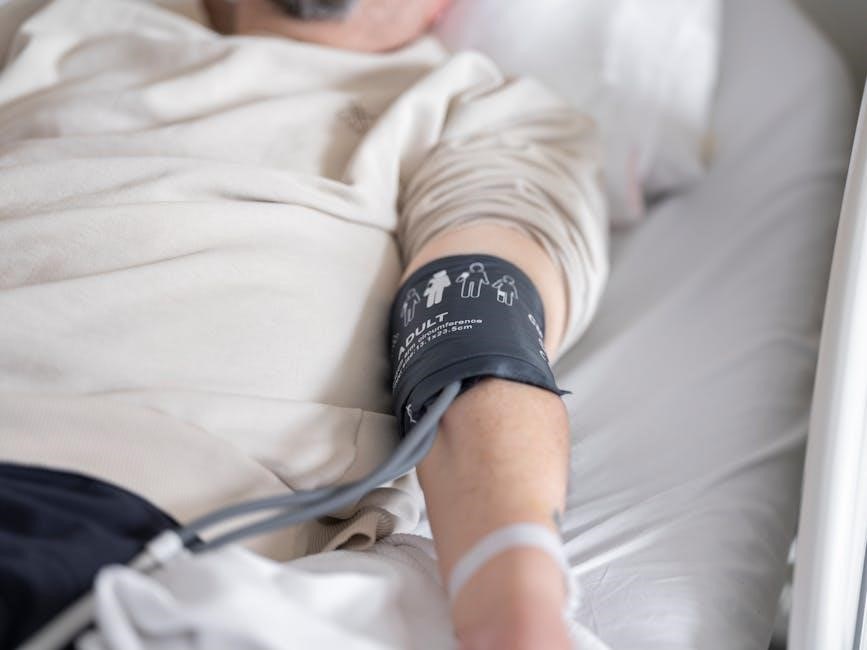
Proper cuff application is crucial for accurate readings. Slide the cuff’s fabric loop through the metal ring‚ ensuring the artery marker aligns with your brachial artery—typically on the inner elbow.
Wrap the cuff snugly around your upper arm‚ approximately one inch above the bend of your elbow. The cuff should be snug‚ but not too tight‚ allowing space for a fingertip to slide underneath.
Secure the cuff firmly with the hook and loop fastener‚ ensuring it remains in the correct position throughout the measurement process. Incorrect placement significantly impacts accuracy.
Setting the Date and Time
Accurate date and time settings are essential for tracking readings with the memory function. Locate the “Set” or “Mode” button on your Equate monitor. Press and hold this button to enter the setting mode.
Use the “Up” and “Down” arrows (or similar buttons) to adjust the year‚ month‚ day‚ hour‚ and minute. Confirm each selection by pressing the “Set” or “Mode” button again.
Ensure the correct AM/PM designation is selected. Once finished‚ exit the setting mode; the monitor will save your changes automatically‚ providing a timestamp for each reading.
Taking Accurate Blood Pressure Readings
Consistent‚ reliable data requires mindful preparation and technique‚ including proper positioning‚ cuff placement‚ and avoiding stimulants before measurement.
Proper Body Positioning
Achieving accurate readings begins with correct posture. Sit comfortably with your back supported‚ feet flat on the floor‚ and legs uncrossed for at least five minutes before measurement.
Ensure your arm is supported at heart level – typically on a table or desk. Avoid talking or moving during the reading process‚ as this can artificially elevate your blood pressure.
Relaxation is key; tension can significantly impact results. Taking several deep breaths before starting can help calm your nerves and provide a more accurate reflection of your typical blood pressure.
Correct Cuff Placement
Proper cuff application is crucial for reliable results. Position the cuff on your upper arm‚ ensuring the lower edge is approximately one inch above your elbow.
The artery marker on the cuff should align with the brachial artery‚ located on the inner side of your elbow. Avoid placing the cuff over clothing; it should be directly on bare skin.
Ensure the cuff is snug but not too tight – you should be able to slip a fingertip underneath the edge. Incorrect placement can lead to inaccurate readings‚ so take the time to ensure it’s correct.
Avoiding Caffeine‚ Exercise‚ and Smoking Before Measurement
To obtain accurate readings‚ refrain from consuming caffeine‚ exercising‚ or smoking for at least 30 minutes prior to measurement. These stimulants can temporarily elevate blood pressure‚ skewing results.
Allow yourself a period of quiet rest before taking a reading. A calm state ensures a more stable and representative measurement.
Empty your bladder before testing‚ as a full bladder can also slightly increase blood pressure. Consistency is key; follow these guidelines each time for comparable data.
Interpreting Your Blood Pressure Readings
Understanding systolic and diastolic numbers is crucial for assessing cardiovascular health‚ allowing individuals to categorize readings based on AHA guidelines.
Understanding Systolic and Diastolic Numbers
Systolic pressure‚ the top number‚ represents the force your heart exerts when beating‚ pushing blood through arteries. Diastolic pressure‚ the bottom number‚ measures the pressure in arteries when your heart rests between beats.
Both numbers are vital; elevated levels of either indicate potential health risks. Normal blood pressure generally falls below 120/80 mmHg. Consistently higher readings necessitate medical attention. Understanding these values‚ as recommended by the American Heart Association‚ allows for informed self-monitoring and proactive discussions with your healthcare provider regarding any concerning trends observed with your Equate monitor.
Blood Pressure Categories (Normal‚ Elevated‚ Stage 1 & 2 Hypertension)
Normal blood pressure is considered less than 120/80 mmHg. Elevated readings range from 120-129 systolic and less than 80 diastolic. Stage 1 hypertension is 130-139 systolic or 80-89 diastolic.
Stage 2 hypertension is 140/90 mmHg or higher. These categories‚ defined by organizations like the American Heart Association‚ help assess cardiovascular risk; Regularly tracking readings with your Equate monitor allows you to identify trends and discuss appropriate management strategies with your doctor‚ ensuring proactive health maintenance and timely intervention if needed.
What to Do with Abnormal Readings
Consistent abnormal readings‚ even if you feel well‚ warrant a discussion with your healthcare provider. Do not self-treat or adjust medications based solely on home monitor results.
Record several readings over a few days and share this log with your doctor. They can assess the overall pattern and determine if further investigation or treatment is necessary. Remember‚ home monitoring complements—but doesn’t replace—professional medical advice. Prompt communication with your physician is crucial for effective blood pressure management and overall cardiovascular health.
Equate Monitor Features & Functions
Equate monitors often include memory storage‚ average reading calculations‚ and irregular heartbeat detection‚ providing comprehensive data for better health tracking and management.
Memory Function – Storing Readings
Most Equate blood pressure monitors are equipped with a memory function‚ allowing them to store a significant number of previous readings – often up to 60 or even 90 measurements. This feature is incredibly valuable for tracking blood pressure trends over time‚ providing a clearer picture of your cardiovascular health.
Stored data typically includes the systolic and diastolic values‚ as well as the date and time the reading was taken. This historical data can be easily reviewed on the monitor’s display‚ helping you and your doctor identify patterns and assess the effectiveness of any treatment plans. Regularly reviewing these stored readings is a key component of proactive health management.
Average Reading Calculation
Many Equate monitors go beyond simply storing readings by automatically calculating average blood pressure values. This is a particularly useful feature‚ as single readings can be influenced by temporary factors like stress or recent activity. The monitor typically calculates an average based on the last three readings‚ or allows you to specify a timeframe for averaging.
Having an average reading provides a more stable and representative measure of your typical blood pressure. This averaged data is invaluable when discussing your health with your physician‚ offering a broader perspective than isolated measurements. Consistent tracking and averaging contribute to better informed healthcare decisions.
Irregular Heartbeat Detection
Certain Equate blood pressure monitors incorporate an Irregular Heartbeat Detection (IHB) feature. During a reading‚ the device analyzes your pulse for inconsistencies that might suggest an irregular heartbeat‚ like atrial fibrillation. If an irregularity is detected‚ the monitor will display an indicator symbol alongside your blood pressure results.
It’s crucial to understand that this feature is not a diagnostic tool. The IHB detection serves as a notification‚ prompting you to consult with your doctor for a proper evaluation. Don’t self-diagnose or alter medication based solely on the monitor’s IHB indication; professional medical advice is essential.
Troubleshooting Common Issues
Addressing problems like error codes‚ cuff inflation failures‚ or inconsistent readings is vital for reliable monitoring; consult the manual for specific guidance and solutions.
Error Codes and Their Meanings
Decoding error messages displayed on your Equate monitor is crucial for effective troubleshooting. The manual details specific codes‚ indicating issues like movement during measurement‚ a weak battery‚ or cuff disconnection.
For example‚ an “Err 1” might signal excessive movement‚ requiring a stiller posture during the next attempt. “Err 2” often points to a low battery‚ necessitating replacement. A “Cuff” error indicates a problem with the cuff connection—ensure it’s securely attached.
Ignoring these codes can lead to inaccurate readings; always refer to the manual for a comprehensive list and recommended actions to resolve each issue promptly.
Cuff Not Inflating
A cuff that fails to inflate is a common issue‚ often stemming from a simple connection problem. First‚ verify the tubing is securely connected to both the cuff and the monitor unit. Ensure there are no kinks or obstructions within the tubing itself‚ hindering airflow.
Next‚ check the cuff for any damage‚ like leaks or tears. If the problem persists‚ try replacing the batteries or confirming the adapter is correctly plugged in.
Consult the manual for specific troubleshooting steps‚ as some models have reset functions that can resolve inflation issues.
Inconsistent Readings
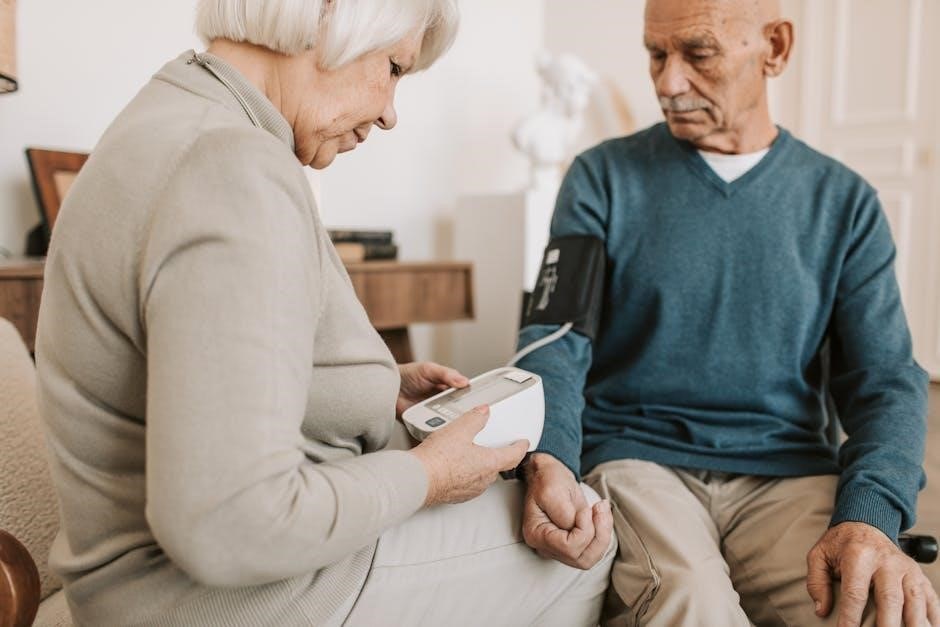
Fluctuating blood pressure readings can be concerning‚ but are often due to preventable factors. Ensure proper technique is consistently followed – correct positioning‚ cuff placement‚ and avoiding stimulants like caffeine before measurement are crucial.
Take multiple readings‚ spaced a few minutes apart‚ and average them for a more reliable result. External factors‚ such as movement or talking during measurement‚ can also cause inaccuracies.
If inconsistencies persist‚ verify battery levels and consider recalibrating the monitor if the manual provides instructions.
Maintaining Your Equate Blood Pressure Monitor
Regular cleaning of the cuff and monitor unit‚ alongside timely battery replacements‚ ensures accurate readings and prolongs the device’s lifespan for consistent health tracking.
Cleaning the Cuff and Monitor
To maintain accuracy and hygiene‚ regularly clean your Equate blood pressure monitor. Always disconnect the cuff and remove batteries before cleaning the monitor unit. Use a slightly damp‚ soft cloth to wipe the monitor’s exterior; avoid harsh chemicals or abrasive cleaners.
The cuff can be cleaned similarly‚ using mild soap and water. Ensure it’s thoroughly dried before reattaching. Never submerge the cuff or monitor in water. Avoid spraying liquids directly onto the device. Regular cleaning prevents the buildup of oils and dirt‚ contributing to reliable blood pressure measurements and extending the monitor’s useful life.
Battery Replacement
When the low battery indicator appears‚ promptly replace the batteries in your Equate monitor to ensure accurate readings; Typically‚ these monitors require two AAA batteries. Always use new batteries of the same type and avoid mixing old and new batteries.
To replace them‚ locate the battery compartment (usually on the back or bottom of the unit) and follow the polarity markings (+ and -). Incorrect battery insertion can damage the monitor. Dispose of used batteries responsibly‚ following local regulations. Consistent battery replacement guarantees uninterrupted home blood pressure monitoring.
Storage Guidelines
Proper storage extends the life of your Equate blood pressure monitor and maintains its accuracy. When not in use‚ store the monitor in a cool‚ dry place‚ away from direct sunlight and extreme temperatures. Avoid storing it in humid environments like bathrooms‚ as moisture can damage the internal components.
Protect the cuff and tubing from kinks or sharp bends. Gently coil the tubing and store it loosely. Keep the monitor in its original packaging‚ if possible‚ or a protective case to prevent dust accumulation and physical damage. Regular‚ careful storage ensures reliable performance.
Advanced Features (Depending on Model)
Certain Equate models offer Bluetooth connectivity for seamless data transfer to smartphone apps‚ multiple user profiles‚ and detailed tracking of morning/evening averages.
Bluetooth Connectivity & App Integration
Equate blood pressure monitors with Bluetooth capability allow for wireless synchronization of your readings with a compatible smartphone or tablet. This feature typically requires downloading the Equate app (or a partner app) from your device’s app store.
Once paired‚ the app automatically uploads your blood pressure data‚ creating a digital record for easy tracking and sharing with your healthcare provider. Many apps offer graphical displays of your readings over time‚ helping you identify trends and patterns.
This integration simplifies monitoring and provides a convenient way to manage your cardiovascular health‚ promoting better adherence to your doctor’s recommendations.
Multiple User Profiles
Certain Equate blood pressure monitor models offer the convenience of multiple user profiles. This is particularly useful for families where several individuals need to track their blood pressure readings with the same device.
Each profile stores readings separately‚ ensuring accurate and personalized data for each user. Setting up profiles typically involves assigning a unique identifier or name to each individual.
This feature eliminates the need for multiple monitors and simplifies data management‚ allowing everyone in the household to benefit from convenient and reliable blood pressure monitoring.
Morning/Evening Average Tracking
Advanced Equate monitors often include a function to track average blood pressure readings taken during morning and evening hours. This is valuable because blood pressure naturally fluctuates throughout the day‚ exhibiting different patterns at various times.
Consistent monitoring at specific times—morning before medication and evening before bed—provides a more comprehensive understanding of an individual’s blood pressure control.
Analyzing these averages helps healthcare professionals assess the effectiveness of treatment plans and identify potential issues more accurately‚ leading to better cardiovascular health management.
Safety Precautions
Individuals with certain heart conditions should consult their doctor before use; home monitoring isn’t a substitute for professional medical advice or treatment.
Who Should Not Use a Home Blood Pressure Monitor
Certain individuals require careful consideration before initiating home blood pressure monitoring. Those with irregular heartbeats‚ or arrhythmias‚ may find readings unreliable without medical guidance. Similarly‚ people who have recently undergone heart surgery or have significant heart valve problems should consult their physician first.
Furthermore‚ individuals experiencing acute illness‚ such as a cold or flu‚ might obtain temporarily elevated readings. It’s crucial to avoid monitoring during these times. If you have a history of severe anxiety related to medical measurements‚ discuss alternative monitoring strategies with your healthcare provider‚ as stress can impact accuracy.
Consulting Your Doctor
Regular communication with your physician is paramount when using a home blood pressure monitor. Share your readings during appointments‚ even if they appear normal‚ to establish a comprehensive health profile. Discuss any consistently abnormal readings or concerns you may have; self-diagnosis can be misleading.
Your doctor can interpret your data in the context of your overall health‚ adjusting medications or lifestyle recommendations as needed. Do not alter your treatment plan based solely on home readings – always seek professional medical advice. Home monitoring complements‚ but does not replace‚ regular check-ups.
Limitations of Home Monitoring
While valuable‚ home blood pressure monitoring isn’t foolproof. “White coat hypertension” – elevated readings at the doctor’s office‚ but normal at home – and “masked hypertension” – normal at the doctor’s‚ high at home – can occur. Accuracy depends heavily on proper technique; incorrect cuff placement or movement during measurement can skew results.
Home readings provide a snapshot‚ not a complete diagnosis. They shouldn’t replace professional medical evaluations. Relying solely on self-monitoring can delay appropriate treatment if underlying issues exist. Always discuss concerns with your doctor for a comprehensive assessment.

Resources and Further Information
For comprehensive heart health guidance‚ visit the American Heart Association’s website. Equate customer support is readily available for specific monitor assistance and inquiries.
American Heart Association Website
The American Heart Association (AHA) provides a wealth of information regarding hypertension‚ cardiovascular health‚ and the proper techniques for home blood pressure monitoring. Their website‚ heart.org‚ offers detailed explanations of blood pressure categories – normal‚ elevated‚ and stages of hypertension – helping you understand your readings.
You’ll find articles on lifestyle modifications‚ such as diet and exercise‚ that can contribute to healthy blood pressure levels. The AHA also offers resources on recognizing symptoms of heart disease and when to seek medical attention. Utilizing their tools can significantly enhance your understanding and management of your cardiovascular well-being‚ complementing your Equate monitor usage.
Equate Customer Support Contact Information
For direct assistance with your Equate blood pressure monitor‚ or if you encounter issues not addressed in the manual‚ contacting their customer support is recommended. While specific contact details can vary‚ generally‚ you can find support information on the Walmart website‚ as Equate is a Walmart brand.
Look for a “Contact Us” or “Customer Service” section‚ often including a phone number and potentially an online chat option. Be prepared to have your monitor’s model number readily available to expedite the support process. Prompt assistance ensures optimal functionality and accurate readings from your device.